A damp cloth does not belong on every houseplant leaf. Kew’s houseplant-cleaning guidance distinguishes large glossy leaves from hairy or prickly surfaces, giving the latter a soft-brush or cotton-bud route. That difference can organize a modest cleaning task before another plant-care product is bought. This workflow follows the stated distinction without identifying a plant from a photograph or claiming that dust removal has cured a growing problem.
Identify the plant and the surface you will handle
Establish the actual plant’s identity and any relevant handling requirements before touching it. If sharp structures, irritating sap or another uncertainty makes access unsuitable, seek appropriate plant-specific advice. This article provides no permission to handle every prickly plant bare-handed or to treat an unknown leaf as safe because it looks familiar.
Arrange a suitable stable working position with the pot supported and vulnerable surfaces protected. Keep the task separate from watering, repotting, pruning and feeding. A dusty leaf does not by itself diagnose why a plant is struggling, and a cleaning session does not require all the other maintenance tasks described on a general care page.
For large glossy leaves, use the damp-cloth route
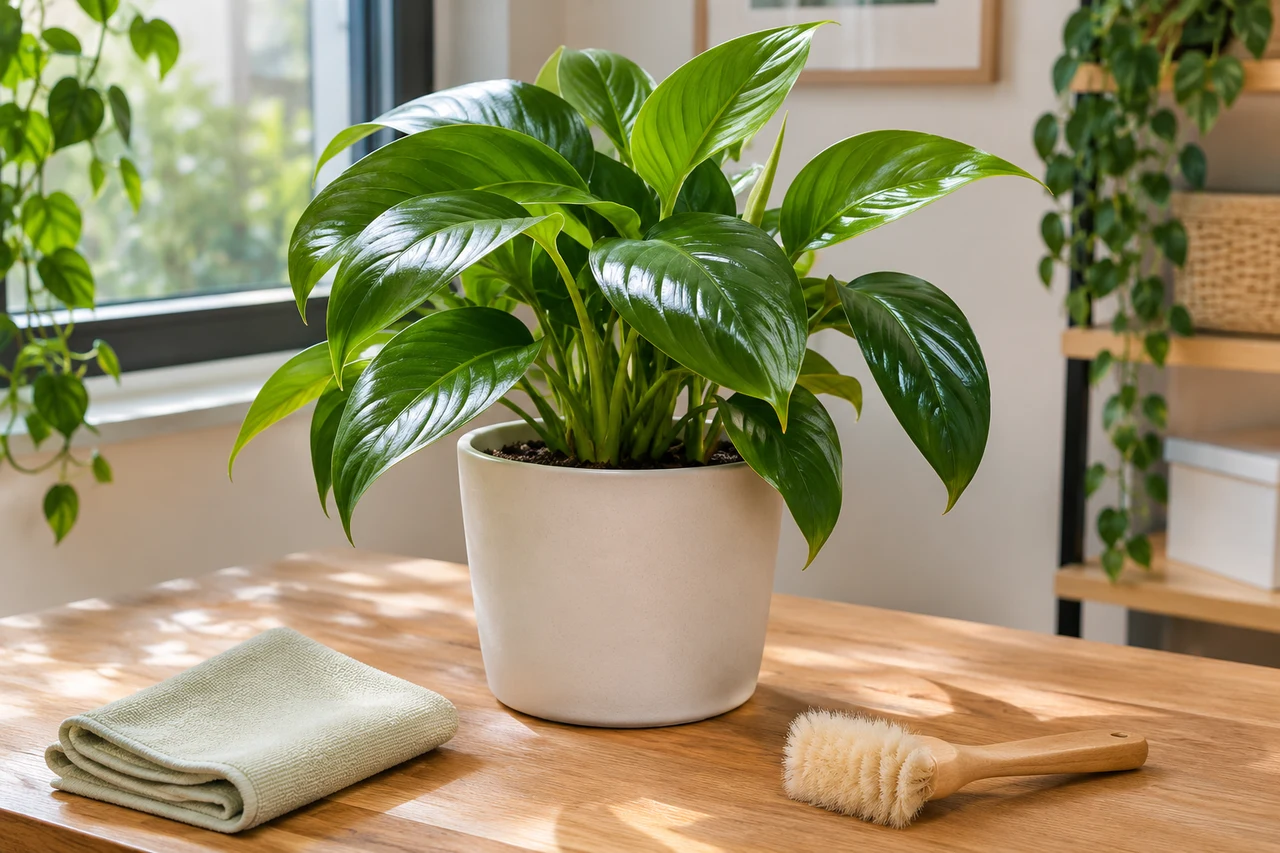
Kew recommends wiping dust from large glossy leaves with a clean damp cloth. Once the actual plant is appropriate for that method, work gently with the leaf supported rather than pulling against its attachment. Use the cloth for visible dust removal, keeping force modest and stopping if the surface or plant presents a problem.
No household detergent, oil, wax, milk or leaf-shine mixture is part of this workflow. The source’s damp-cloth instruction is not evidence that an added coating improves every leaf. It also supplies no cleaning frequency, number of passes or quantified change in growth for an individual plant. Assess the actual task instead of rubbing until an imagined shine has been achieved.
For hairy or prickly surfaces, change tools
Kew instead recommends a soft brush or cotton bud for hairy or prickly leaves. Choose appropriate access and a gentle tool consistent with the actual plant’s handling needs. Do not substitute the wiping route simply because a cloth is already wet. The point of the distinction is to consider the surface before repeating the same movement.
Kew also mentions tweezers for loose debris such as compost or gravel. Only address material you can identify and reach appropriately; this is not an instruction to pull an attached plant structure or investigate a suspected pest with force. If the material or surface is uncertain, leave it for plant-specific advice.
Finish the small task without promising a cure
Check what you have actually removed, clear the ordinary work area and return the plant to its appropriate position. Record a remaining concern separately from the dusting task. A changed leaf color, damaged growth or suspected pest needs its own assessment rather than being relabeled a housekeeping problem.
Kew explains why dust accumulation matters to leaves, but no growth, photosynthesis or pest outcome has been measured here. Before purchasing a specialist leaf-cleaning kit, consider whether a suitable existing clean cloth or soft tool meets the supported route. The useful result is a method matched to the actual leaf surface, with the plant’s other requirements left intact.
Sources & further reading
Published sources for the details and examples discussed in this story.