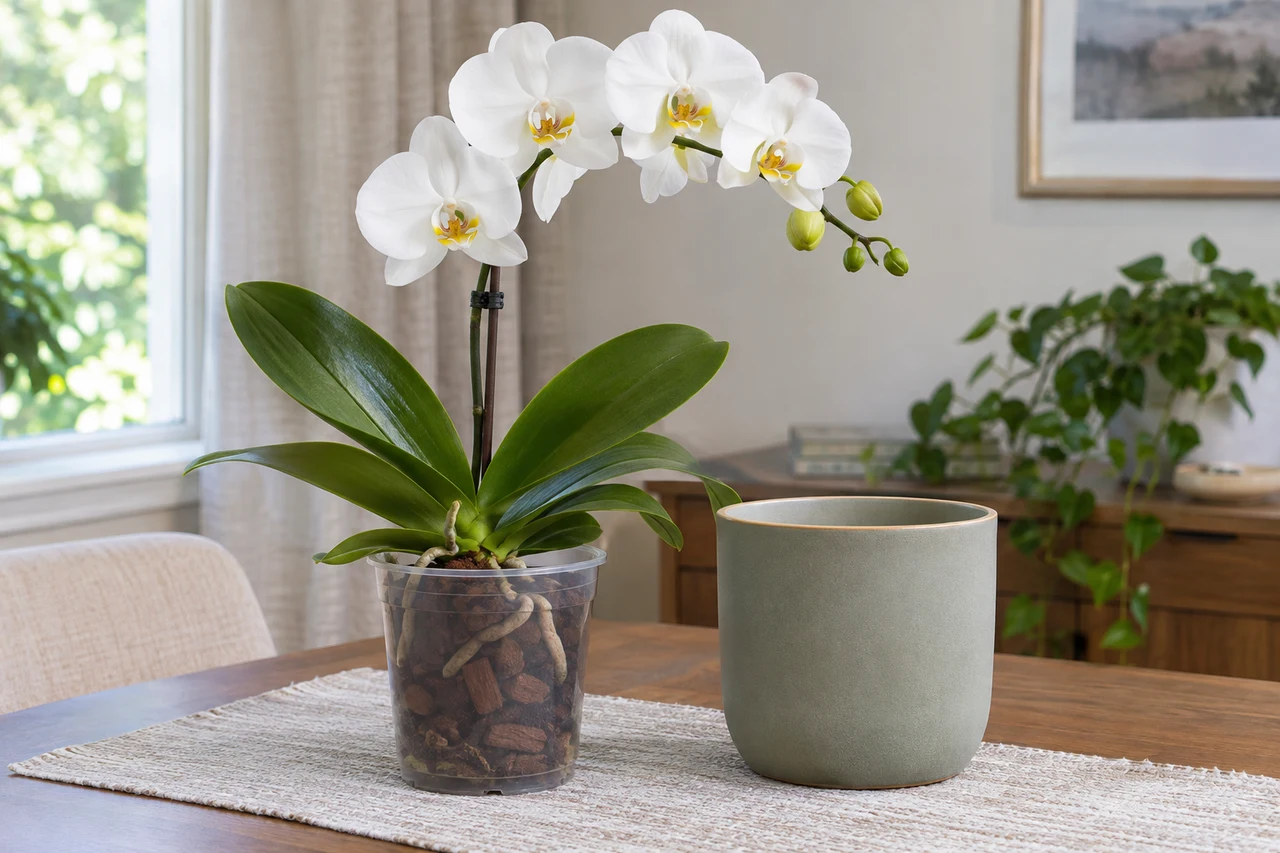
A decorative pot can hide more than a nursery container. It can also make a moisture check or trapped water easy to miss. For an identified Phalaenopsis, or moth orchid, begin with its actual growing container and care information before choosing an outer cover. This proposed display workflow follows limited RHS guidance and reports no plant-care trial, inspected specimen or flowering result.
Identify the plant and the existing container
Confirm that the plant is a moth orchid rather than applying this guide to every orchid or flowering houseplant. Retain the actual label and supplier’s care information. RHS describes moth orchids growing in loose bark-based material and recommends a transparent container to help see moisture below the surface and inspect the roots.
A decorative purchase is not by itself a reason to repot. This article supplies no root-cutting, compost-replacement or propagation procedure. If the plant has a care problem or needs repotting, follow the appropriate species-specific guidance separately. The task here is arranging an optional outer cover around a suitable existing inner pot, not changing the root environment to fit a color scheme.
Check the fit with the real inner pot
Compare the actual inner pot with the usable inside of the proposed cover, including any narrowing below the rim. Ask whether you can remove the planted inner container for the required checks without forcing it. An outside diameter or a styled photograph does not establish that fit. No universal clearance measurement is supplied.
Keep stems and aerial roots out of a forced fit. RHS says not to bury or cut off the roots growing above the compost merely because they appear to be leaving the container. A cover that requires changing the plant to make it look tidy is a reason to reconsider the cover. This guide does not assess a particular vessel’s weight, stability or watertightness.
Keep drainage visible in the routine
RHS advises letting excess water drain and not leaving a moth orchid sitting in water. An outer cover should therefore not become an unnoticed reservoir. Follow the actual plant’s care instructions, use an appropriate place for watering and drainage, and check that collected water is removed before returning the inner container to its display position.
This is not a fixed weekly watering prescription. A transparent pot can assist observation, but a photograph cannot establish the present moisture or root condition of a real plant. If you cannot remove or inspect the container appropriately, ask for suitable plant-care advice rather than pouring in more water because the upper bark looks dry.
Let the decorative choice stay optional
Return the plant to a position consistent with its actual light and temperature requirements. RHS keeps moth orchids out of direct summer sun and away from heaters and drafts. The chosen cover’s finish does not establish that a location meets those needs, and a more expensive vessel supplies no growth guarantee.
Before buying, imagine the ordinary care cycle: reach the pot, remove it appropriately, inspect, follow the real watering directions, drain and return it. If a cover makes that cycle awkward, a suitable simpler presentation may be preferable. The useful display preserves access to the living plant instead of concealing its care needs behind a permanent arrangement. No plant was lifted, watered or repotted for this article.
Sources & further reading
Published sources for the details and examples discussed in this story.