A bathroom can already contain several strong outlines before a mirror is chosen: a rectangular cabinet, a rounded basin, a vertical tile joint. A round mirror does not automatically soften every room, and a square one does not automatically make it orderly. The more useful question is which existing line you want to repeat. Two documented IKEA mirrors provide a concrete starting point for that visual decision.
Identify the outlines, not two interchangeable products
The references here are the black LINDBYN, article305.061.16, listed at43¼ inches in diameter, and the black square NISSEDAL, article905.037.80, listed at25⅝ by25⅝ inches. The maker’s supplied photographs show the former as a thin dark circle and the latter as a straight-edged square frame. These are different actual sizes as well as different shapes; their product photographs are not a controlled same-size experiment.
In LINDBYN’s supplied room photograph, the circle sits above a straight-edged dressing surface. NISSEDAL’s room photograph places the square above a long chest of drawers. Both pictures make the furniture relationship visible, but neither is a photograph of the imaginary bathroom developed below. The point of identifying them is to describe real outlines accurately, rather than inventing a product from the words curved and angular.
A circle that answers the basin
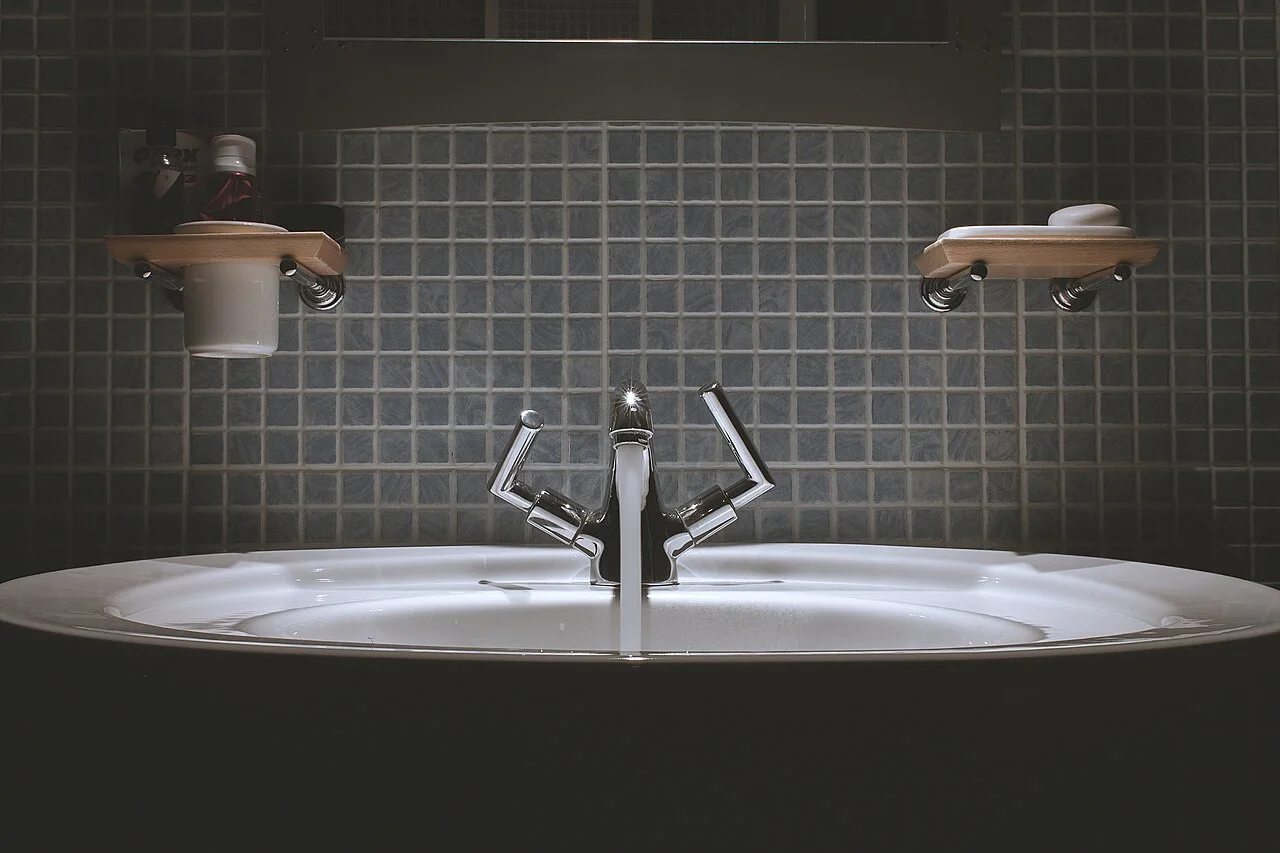
Imagine a bathroom with a broad rectangular vanity and a rounded basin. The owner likes the basin’s curve and would welcome a second curved outline above it. A circular mirror could make that intention legible. In this proposed composition, the vanity supplies the long horizontal anchor while the mirror and basin establish a different relationship across the vertical space.
The circle would interrupt the vanity’s rectangular geometry rather than continue it. That could be precisely what the owner likes. It would not mean that the bathroom had become more relaxing, that faces would look different, or that a particular diameter would fit. Those are not conclusions a proposed outline can supply. The visual preference is simply for the basin’s curve to gain a companion.
A square that answers the cabinet
Now keep that hypothetical bathroom, but imagine an owner who enjoys the cabinet’s definite edges. A square mirror could repeat its horizontal and vertical directions. The rounded basin would then remain the contrasting shape between two angular objects. The same existing feature becomes a deliberate exception instead of the beginning of a repeated curved motif.
This owner might prefer the distinction between the basin and its setting. Adding a curved mirror could dilute that distinction even if the mirror is attractive in isolation. Conversely, someone already tired of repeated rectangles may find the square too insistent. There is no need to diagnose the room’s style category to explain either choice; name the line you want to carry forward.
The actual LINDBYN and NISSEDAL sizes should not be mentally substituted for one another. If the preferred circle cannot occupy the intended area appropriately, choose another documented size or product rather than stretching the picture in an online mockup. The same applies to a square whose outer size leaves the furniture relationship unresolved. Shape preference narrows a search; it does not complete the fit assessment.
Let suitability remain a separate decision
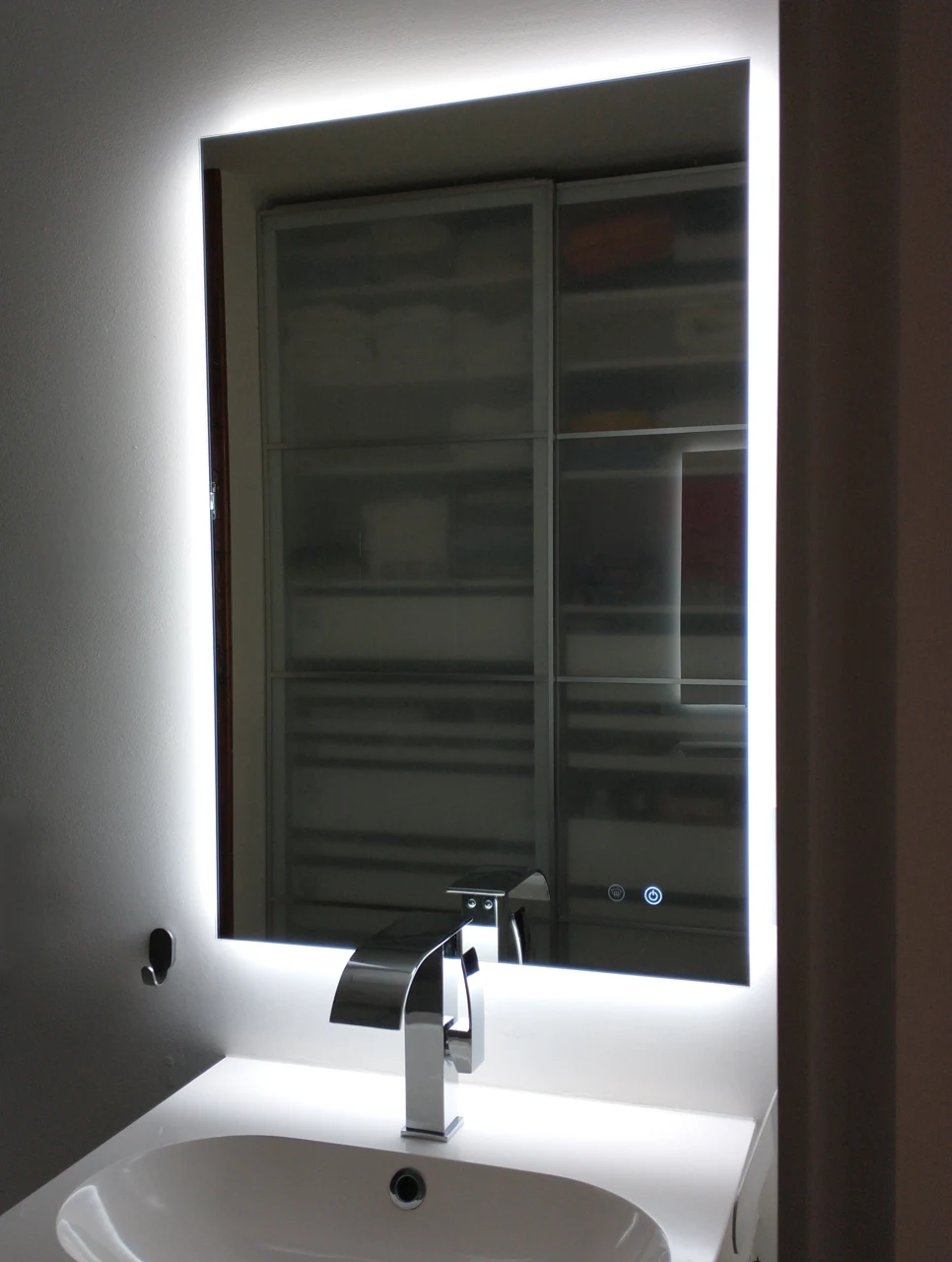
IKEA’s current US listings state bathroom approval for these two exact products. That manufacturer statement does not establish a suitable position, fixing or installation in an unidentified bathroom. Follow the current exact instructions and obtain suitable help for the actual wall and setting. This feature supplies no electrical specification or permission to add lighting, heaters or other devices around either mirror.
Before buying, relate the actual outer dimensions to the cabinet and other retained features, then resolve the practical requirements. Do not buy coordinated circular accessories merely to justify the circle, or a matching cabinet merely to justify the square. If the existing basin or cabinet already supplies the relationship you like, the mirror may be the only new outline needed.
Describe the choice in one concrete sentence
For the first owner: I want the mirror to repeat the basin’s curve while the vanity stays angular. For the second: I want the mirror to repeat the cabinet’s edges while the basin stays different. Those sentences can guide a genuine product comparison without pretending that either photographed room proves the result at home. They also make it easier to stop shopping when a suitable candidate serves the chosen relationship.
Sources & further reading
Published sources for the details and examples discussed in this story.