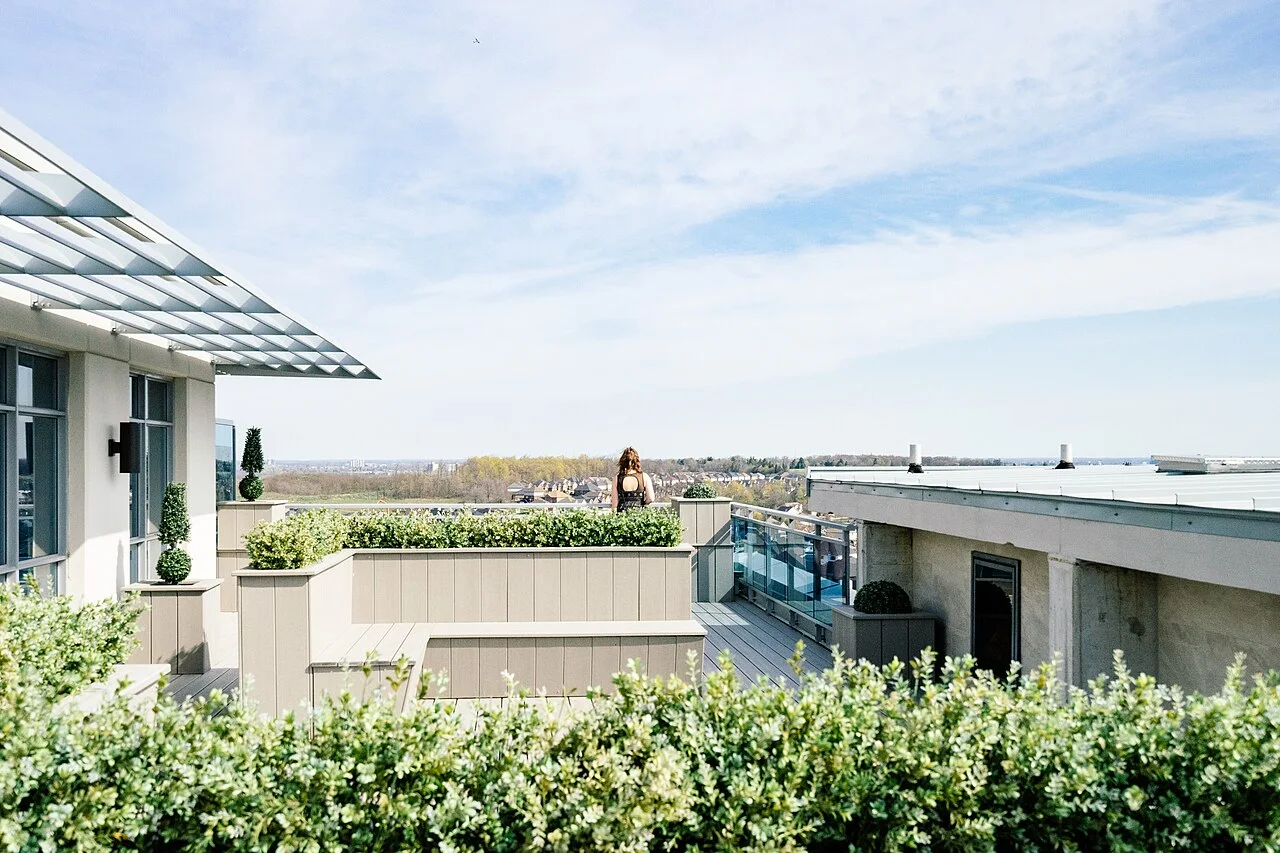
Two chairs can occupy almost the same part of a patio and make very different invitations. Facing outward, they suggest looking together at something beyond the seating area. Turned inward, they suggest that the conversation is the main event. This comparison uses a deliberately hypothetical small patio with an opening toward a garden and a wall behind it. It is a visual planning exercise, not an assessment of an actual deck, balcony or accessible route.
Outward: a shared foreground
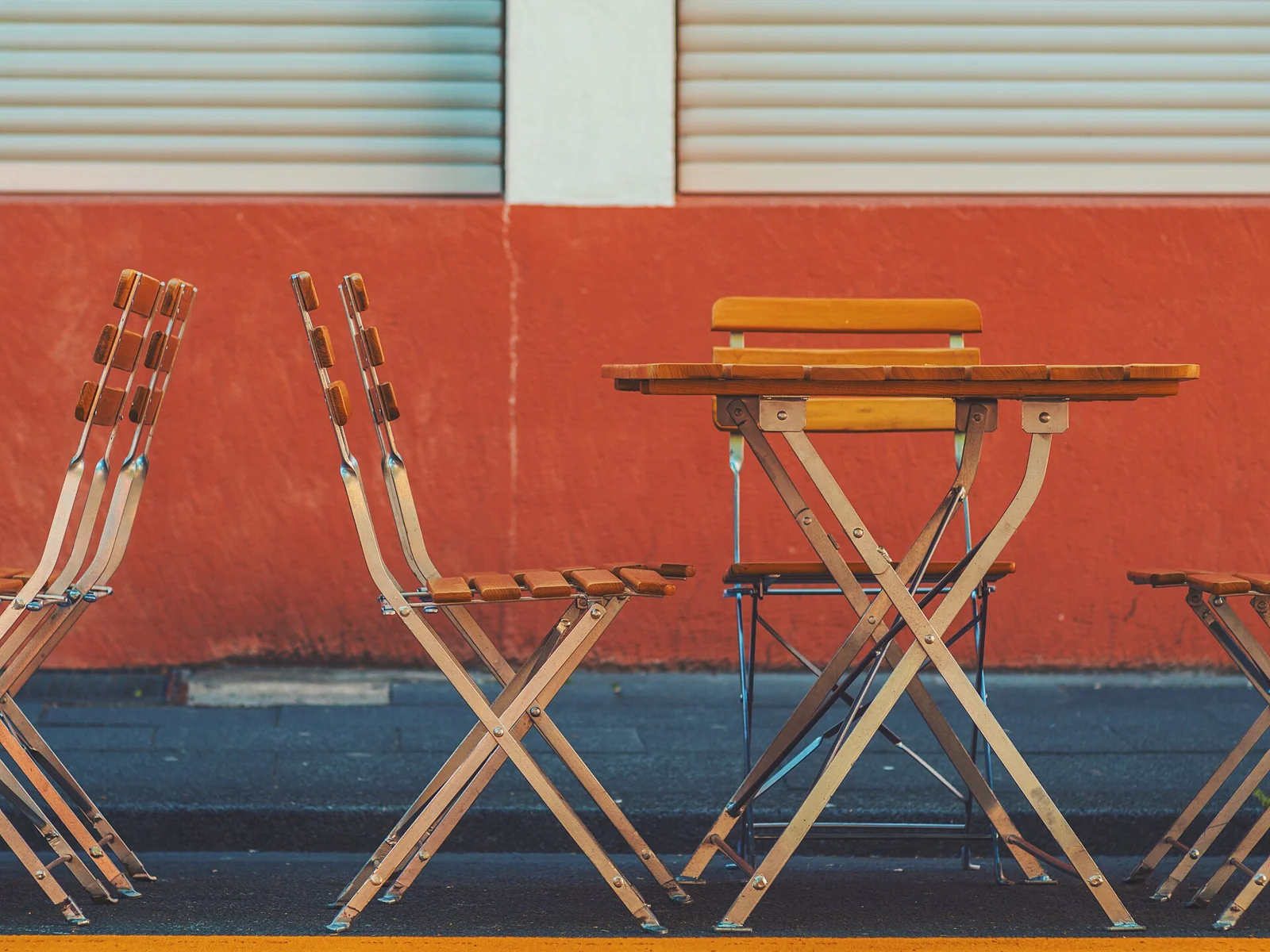
In the outward arrangement, the chairs face the garden opening. The view becomes a shared subject even when nobody is speaking. A person can look ahead without appearing to turn away from the other seat. That can suit a pause with a drink or a conversation that does not need continuous eye contact, but it does not establish that the seats will be comfortable or the setting quiet.
There is a tradeoff in the room behind the view. Someone approaching from the house may see the backs of the chairs first. The seating reads as directed away from the doorway rather than gathered around it. Whether that feels inviting is an aesthetic preference tied to the particular entrance and what happens there.
Inward: the seats become the scene
Now turn the same chairs toward one another within the same imagined area. The opening to the garden shifts toward the side of each person's view. Faces, hands and a shared small surface become more prominent than the distant outlook. A conversation can occupy the composition without requiring either person to turn toward a neighbor for every exchange.
Inward-facing does not automatically mean private. Other people may still see or hear the conversation, and the surroundings may be more exposed than a simple plan suggests. Here the point is narrower: the direction of attention changes even though the chairs, the wall and the garden opening remain the same.
Consider what becomes background
In the outward version, the garden frames the activity. In the inward version, one person may be looking toward the house wall while the other looks toward part of the garden. The two seats no longer necessarily have equivalent backgrounds. If the wall contains a visually busy door or storage area, that becomes part of the conversation scene for one person.
Getty's discussion of space and the relationships among forms provides a vocabulary for noticing those differences. The judgment about this imaginary patio is our interpretation. There is no need to claim that a certain orientation improves relationships or produces a measured feeling of calm.
Choose the occasion, not an ideal diagram
For an afternoon spent mainly watching the garden, the outward version may express the intended use more directly. For a visit centered on conversation, the inward version may be the more coherent choice. A patio used for both may warrant a flexible arrangement, but the actual furniture's handling instructions and the real space still determine what moving it involves.
A drawing cannot establish wind behavior, surface suitability, load capacity, circulation or accessibility. Nor should a decorative screen be invented to rescue a preferred orientation. Keep those practical assessments separate. The contribution of this comparison is to name the visual and social emphasis of each direction before choosing which matters most.
Sources & further reading
Published sources for the details and examples discussed in this story.