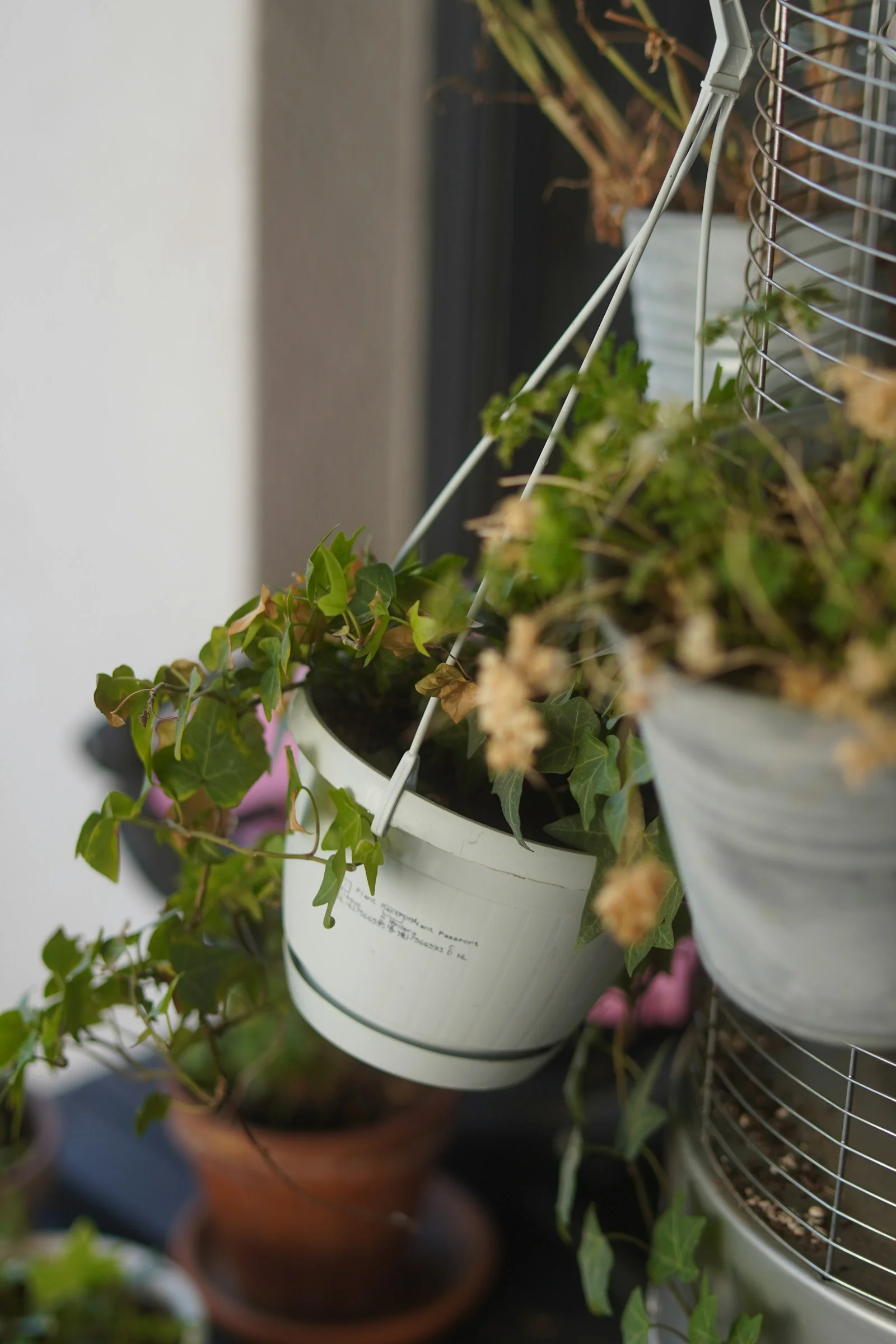
A watering kit is useful when it makes checking and caring for containers easier. It is less useful when it is bought as a promise that plants can be ignored. Before choosing a new can, hose, or automated system, observe how water reaches the pots now and where the routine becomes awkward. A small balcony may need a simpler improvement than the elaborate equipment shown in a garden catalog.
| Observed difficulty | Question for the shortlist |
|---|---|
| Carrying a full can | What filled size is manageable along the actual route? |
| Reaching a container | Does the product provide suitable controlled access? |
| Different pots drying differently | Can the arrangement accommodate plant-specific needs? |
| Travel absence | What testing, monitoring, and additional care are required? |
Start with access to water
Note the route from the water source to the containers, including doors, thresholds, and the weight you are comfortable handling. A large can reduces the number of trips but may be inconvenient to lift or pour when full. A smaller one may suit a compact collection better. Think about where the equipment will be stored after use and whether it can drain or dry appropriately. Choose around the routine you can manage rather than the largest capacity available.
Observe the containers themselves
The RHS explains that watering needs vary with plants, growing medium, container size and material, weather, and position. Do not assume every pot needs the same amount on the same schedule. Check moisture using appropriate guidance for the plants you grow. If different containers dry at different rates, a single uniform delivery system may need careful planning. A collection that looks visually coordinated can still contain plants with different care requirements, and equipment should not erase those differences.
Match the delivery method to the task
Consider whether you need a controlled pour into a small pot, access to a difficult corner, or a manageable way to water several containers. Read the product's dimensions, compatibility, and instructions. Do not infer suitable pressure or fittings from a photograph. If considering a hose or automatic system, confirm the water-source connection and any relevant building rules. Keep the route clear and avoid arrangements that create hazards or unwanted water discharge onto neighboring spaces.
Be realistic about unattended watering
Read the exact setup and monitoring requirements for any self-watering or timed product. A convenient mechanism is not a guarantee that every plant will remain suitable for an indefinite absence. Test and observe a proposed arrangement before relying on it during travel, following instructions and plant-specific guidance. Arrange appropriate help where needed. If a holiday is the main reason for buying, compare a realistic care arrangement with the cost, storage, and upkeep of equipment that may otherwise see little use.
Buy for the demonstrated difficulty
List the problem the new item must solve: reaching a pot, carrying a comfortable quantity, or managing a specific connection. Compare total costs, required accessories, replacement parts, and returns. If the existing can works and the issue is remembering to check plants, a routine change may be more useful than a purchase. Keep equipment instructions accessible and review the setup as the plant collection changes. Good watering equipment supports attention to actual conditions rather than replacing it with an attractive schedule.
Sources & further reading
Published sources for the details and examples discussed in this story.