When dining shares a living room, a chair is not only the object facing you at a meal. Its back may occupy the view from the sofa for much of the evening. That makes the space beneath a backrest, or the continuity of a shell, a useful buying question. Two exact IKEA references offer a concrete comparison without pretending that appearance establishes comfort or practical fit.
Two actual chairs, with a visible difference
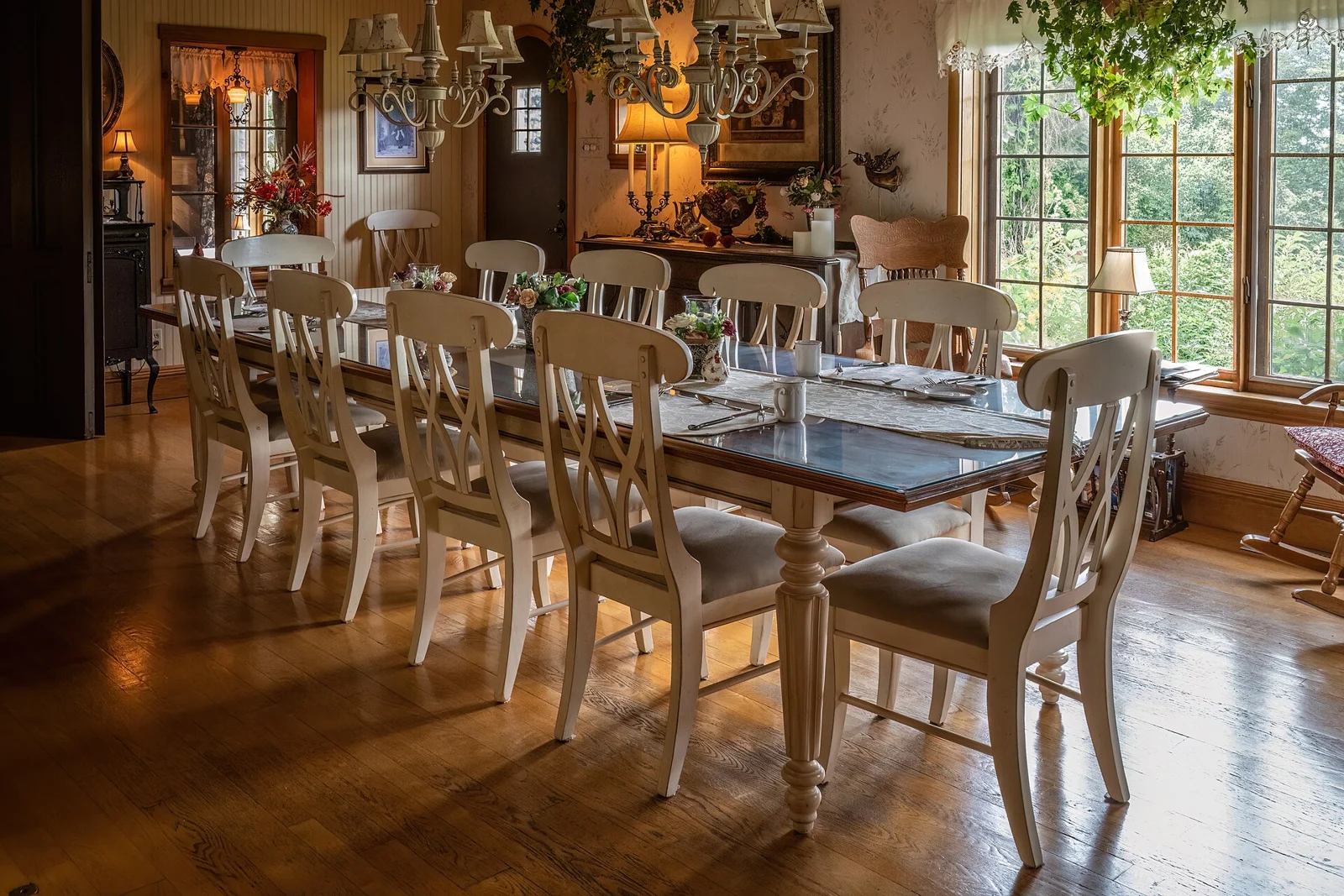
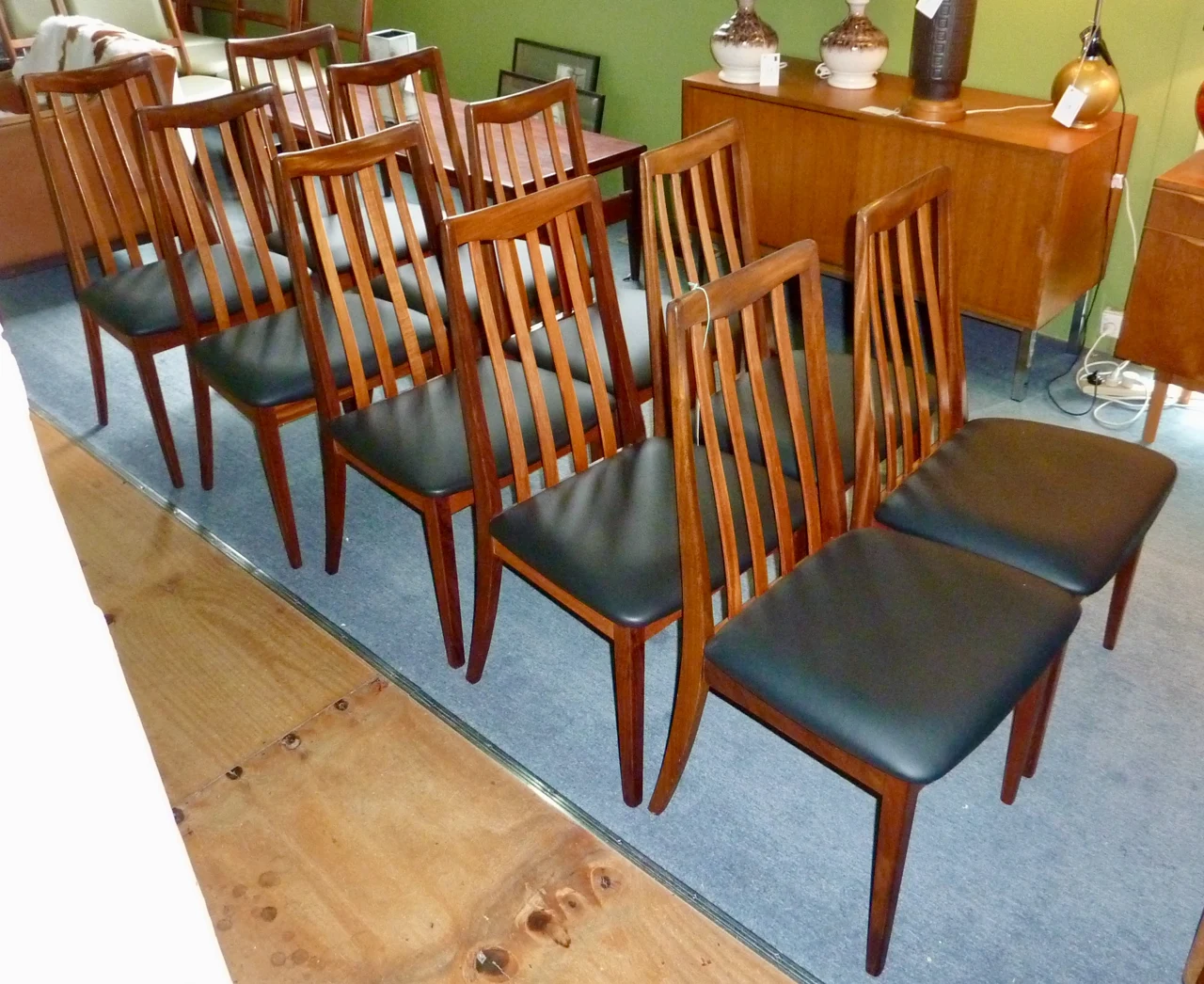
The references are the US TEODORES in white, article304.861.56, and ODGER in anthracite, article504.573.13. The supplied TEODORES rear-angle photograph shows a back panel separated from the seat by a broad opening. In the supplied ODGER room photograph, the curved shell continues from back toward seat without that same open band. The photographs support a distinction between these visible shapes, not a controlled comparison of materials or performance.
The colors also differ, so the impression cannot be attributed to the opening alone. White TEODORES against a pale background is not visually equivalent to anthracite ODGER beside a light table. Use the actual product identities to keep those differences visible rather than claiming that every open back is lighter-looking or every continuous shell is heavier-looking.
An opening lets another line remain part of the view
Imagine keeping a plain wooden dining table whose lower edge is visible from an adjacent sofa. The owner likes that long horizontal line. A chair with a gap below its back panel could let part of the table or the space beneath it remain visible through the chair, depending on the actual viewpoint. In an original paper composition, I would use that possibility to make the chair and table outlines overlap rather than replace one another.
The exact view matters. A gap can reveal a useful table line from one position and an unrelated object from another. The TEODORES reference establishes that the opening exists; it does not photograph the imaginary sofa view or guarantee what will appear through it. The proposed preference is for a more interrupted chair silhouette within a shared view, not for an abstract category called lightweight furniture.
A continuous back can become an intentional repeated shape
An owner who prefers the chairs to read as a group of definite objects could instead be interested in the more continuous ODGER shell. In the maker’s room photograph, the dark chair surfaces remain distinct beside the lighter table. For a hypothetical shared room, I would consider whether those repeated back shapes are something the owner actually wants to see beyond the sofa.
That preference could be positive. The chairs might give the dining area a recognizable set of shapes without relying on a large centerpiece. It could also be unwelcome if the owner wants the table’s outline to remain the main visible element. Neither response establishes a universal rule that a small room needs open-backed chairs or that a closed back makes a room crowded.
Keep the existing table fixed while considering the alternatives. Replacing both table and chairs at once would make it harder to explain which relationship prompted the purchase. If the desired result depends on a completely different table, the chair comparison has revealed a wider project rather than solved the original buying question.
Look from the position that belongs to everyday life
For your actual room, examine the view from where you normally sit rather than only the dining-room entrance or a retailer’s camera position. A useful observation would be specific: the table edge stays visible below this back panel, or these chair backs form a repeated dark shape that I enjoy. Do not record either observation unless you have actually made it with the relevant chair or an honest representation.
This can help decide which product photographs or showroom views you still need. Ask for a rear view when the listing concentrates on the seat front. A close-up of an attractive finish does not answer the same question as a whole chair shown from behind.
Resolve the remaining purchase on its own evidence
Chair width, seat height, movement around the table, load information, care and personal comfort remain separate enquiries. No chair was sat in, assembled or placed in a home for this comparison. Check the exact current documentation and the actual table relationship before ordering; a visually appealing back does not establish suitable seating.
The useful shortlist can still become narrower. You are looking either for an opening that allows another line into the sofa view, or for a continuous back whose repeated shape you want to keep seeing. That is a real preference a seller’s whole-product images can help investigate.
Sources & further reading
Published sources for the details and examples discussed in this story.