A dining table in a multipurpose room may host breakfast, paperwork, a child's project, and guests in the same week. The best choice is not necessarily the largest table that fits between the walls. Chairs need to move, people need to pass, and other storage still needs to open. Before choosing a shape or extending mechanism, map the room's normal use and decide which occasions genuinely require more seats.
Draw the room with chairs in use
Measure the available area and note doors, cupboards, and routes through the room. IKEA's planning guidance recommends recording dimensions and openings; for a dining setup, include the movement of the chairs as well. Use removable tape to mark a proposed table, then place existing chairs around it if practical. Walk past while someone is seated. A layout that works when every chair is tucked away may be inconvenient during the meal it was intended to accommodate.
Count everyday and occasional places separately
Write down the number of people who usually sit together and how often a larger gathering actually occurs. An occasional need might be met by a different arrangement rather than a permanently oversized table. If considering an extension, check the dimensions in every configuration and where extra parts are stored. Read the manufacturer's instructions for operating the mechanism and avoid assuming that one person can manage it comfortably. Flexibility is useful only when the room and routine can support the change.
Check what happens under the top
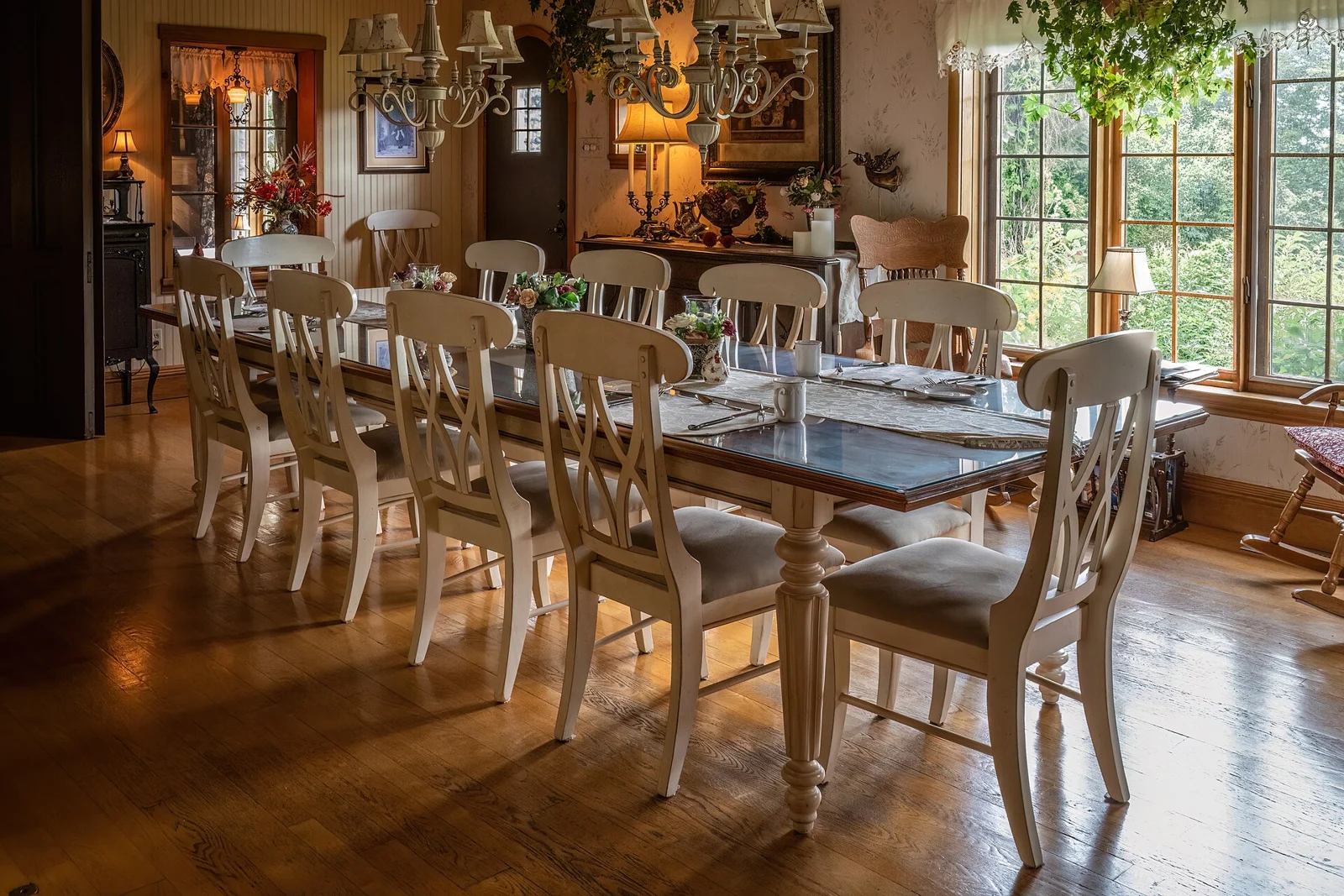
Look at leg positions, aprons, supports, and the space available for the chairs you intend to use. A table's overall length does not tell you how comfortably several chairs will fit between its supports. Compare actual chair widths and arm heights. If you already own the chairs, take their measurements to the showroom or send them to the retailer. A compatible-looking style can still create a practical mismatch when the arms cannot slide under the table or a leg interrupts a seating position.
Choose a surface for its real tasks
Read care instructions and the manufacturer's guidance on use. If the table also handles work or projects, decide how it will be cleared and protected using suitable methods. Do not infer scratch, heat, or stain resistance from a finish's appearance or a general material name. Ask for product-specific information where those properties matter. A more delicate surface may still be a reasonable choice, but only when you accept the maintenance and do not need it to behave like a different product.
Price the entire seating plan
Include chairs, delivery, assembly, any required accessories, and the cost or difficulty of returning bulky furniture. Check whether a displayed set is sold as a complete package or shown with separately priced pieces. Try a realistic room arrangement before ordering. If the plan leaves nowhere for the activities the room handles on most days, revisit the size. A table that supports ordinary meals comfortably and occasional gatherings sensibly is more useful than a generous dining photograph that crowds everyday life.
Sources & further reading
Published sources for the details and examples discussed in this story.