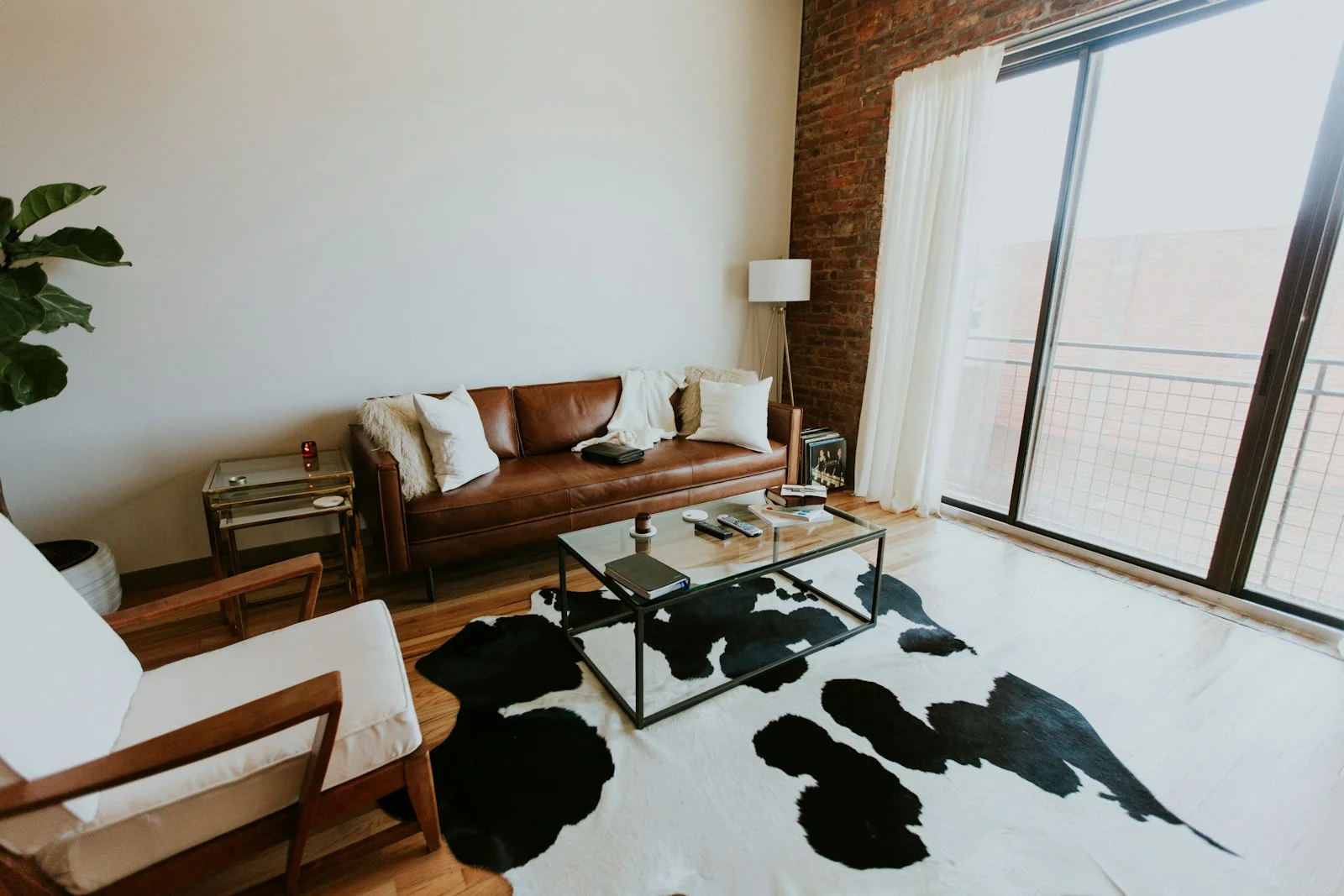
A coffee table occupies the space between several activities: sitting down, stretching out, walking across the room, and putting something within reach. Its shape can matter more than its size in a catalog photograph. Before choosing one, observe the gaps around the furniture that is staying. The aim is not to fill an empty rectangle on the floor, but to add a useful surface without making the room harder to move through.
Map the moving parts
Measure the available area and note doors, drawers, reclining mechanisms, and the route people normally take. IKEA's planning guidance recommends recording room dimensions and openings; extend that plan to the furniture's actual movements. Mark a possible footprint with removable tape and use the room for an evening. Include the awkward moments, such as carrying a laundry basket or reaching a low cabinet. A table that looks proportionate from the doorway may still obstruct the room's busiest path.
Decide what the surface must hold
List what regularly lands near the sofa: drinks, a remote, a book, or a laptop used briefly. Distinguish a convenient surface from storage for everything without another home. If meals or work are involved, consider whether a different existing table already serves those tasks better. Do not assume a large top is useful simply because it can display more objects. Choose a surface that meets the real need and leaves enough visual and physical room around it.
Compare shapes in the actual layout
A rectangular table can align with a long sofa, while another shape may suit a different circulation pattern. Neither is automatically best for a small room. Try paper or taped outlines rather than relying on a rule about ideal proportions. Check how the shape works beside every seat that matters, not just the central position. Rounded corners do not remove every safety consideration; follow the product's instructions and assess suitability for the people who use the room.
Consider the hidden storage tradeoff
A lower shelf or compartment can be useful when its contents are defined. It can also make a table harder to clean around or encourage a pile of things you rarely use. Compare the clearances, opening method, and maintenance information for the exact item. If a lift-top or moving component is involved, read its operating instructions and limits. A clever mechanism is only a benefit when it solves your routine and can be used appropriately in the available space.
Order after checking the complete object
Read the material, dimensions, assembly requirements, care instructions, and return policy. Check whether the photographed finish is the one selected in the basket. Include delivery and any required assembly in the cost. If the taped outline already feels intrusive, do not expect a lighter color to solve the physical problem. Consider a smaller movable side table instead, or wait until the room's layout is clearer. A useful living room does not require every conventional furniture category to be represented.
Useful places to look
Sources & further reading
Published sources for the details and examples discussed in this story.