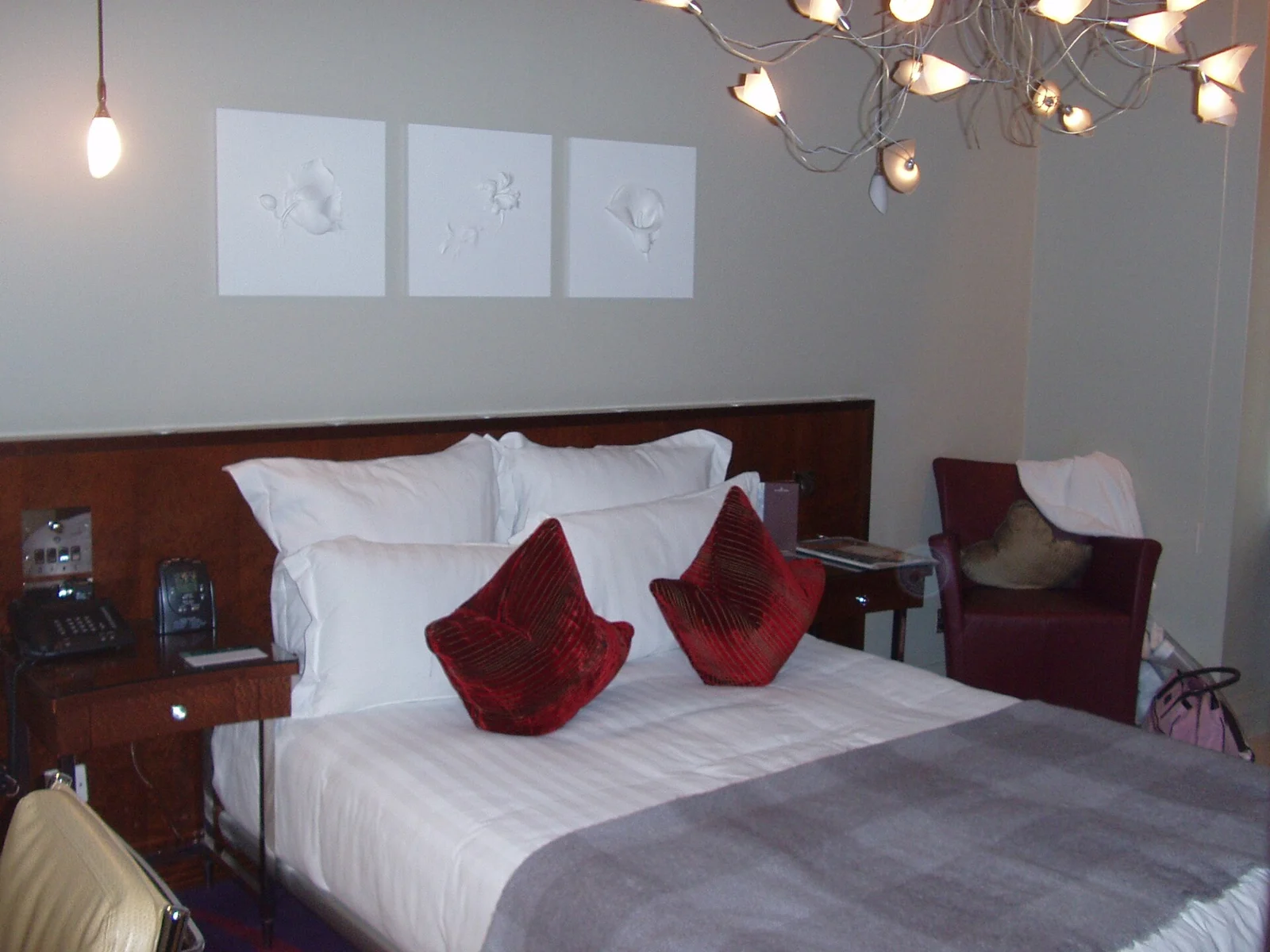
A bedside table sits in a small but busy zone: a lamp, a glass, a book, and perhaps several objects you do not want visible all day. The right piece depends on what you need within reach and how the bedroom is arranged. Before ordering matching tables, inspect each side of the bed independently. A wall, door, wardrobe, or socket can make the two positions quite different even when the finished room looks symmetrical in a photograph.
Measure the bedside activity
Record the available width and depth with wardrobe doors and drawers open. Note the mattress height as a useful reference for trying surface positions, not as a universal rule about an ideal table. IKEA's room-planning guidance encourages measuring and noting openings and outlets. Think about reaching a lamp or setting down a glass from your normal position. Use an existing surface temporarily if that helps you understand what is comfortable before committing to a new item.
Give the top a limited job
List the things you actually use at night or first thing in the morning. If the surface must hold a lamp, check its base dimensions and how the switch is reached. Keep unrelated storage needs separate. A larger top can become a convenient place for unfinished paperwork rather than a better bedside arrangement. Decide whether books, charging equipment, or personal items need a visible place, a drawer, or storage elsewhere in the room.
Choose between open and closed storage
An open shelf makes contents easy to see but leaves them visible and exposed to ordinary dust. A drawer conceals items but needs clearance and can become an unexamined catch-all. Check internal dimensions, not just the furniture's outer size. A decorative drawer may not fit the object you intend it to hold. If a door opens toward the bed, test that movement in the planned footprint. The useful choice is the one that matches your contents and available space, not the one with more compartments.
Consider installation and stability
Follow the manufacturer's assembly, placement, and any anchoring instructions. Check wall suitability and permissions before choosing a wall-mounted design, and use appropriate help where needed. Do not assume a narrow footprint is stable enough for every use. Think about how the piece will be cleaned around and whether cords can be arranged safely. A floating appearance can create visual space, but it may involve installation commitments that make a freestanding alternative more suitable for your home.
Compare one side with the other
The two sides do not have to use identical furniture if their practical needs differ. A table on one side and a compact shelf on the other can be a deliberate choice, provided each is suitable and correctly installed. Compare delivered cost, required parts, assembly, and returns before ordering. Try the first arrangement with the actual bedside contents and remove things that have no role there. A calm surface is usually easier to preserve when the storage decision began with a small, realistic list.
Useful places to look
Sources & further reading
Published sources for the details and examples discussed in this story.