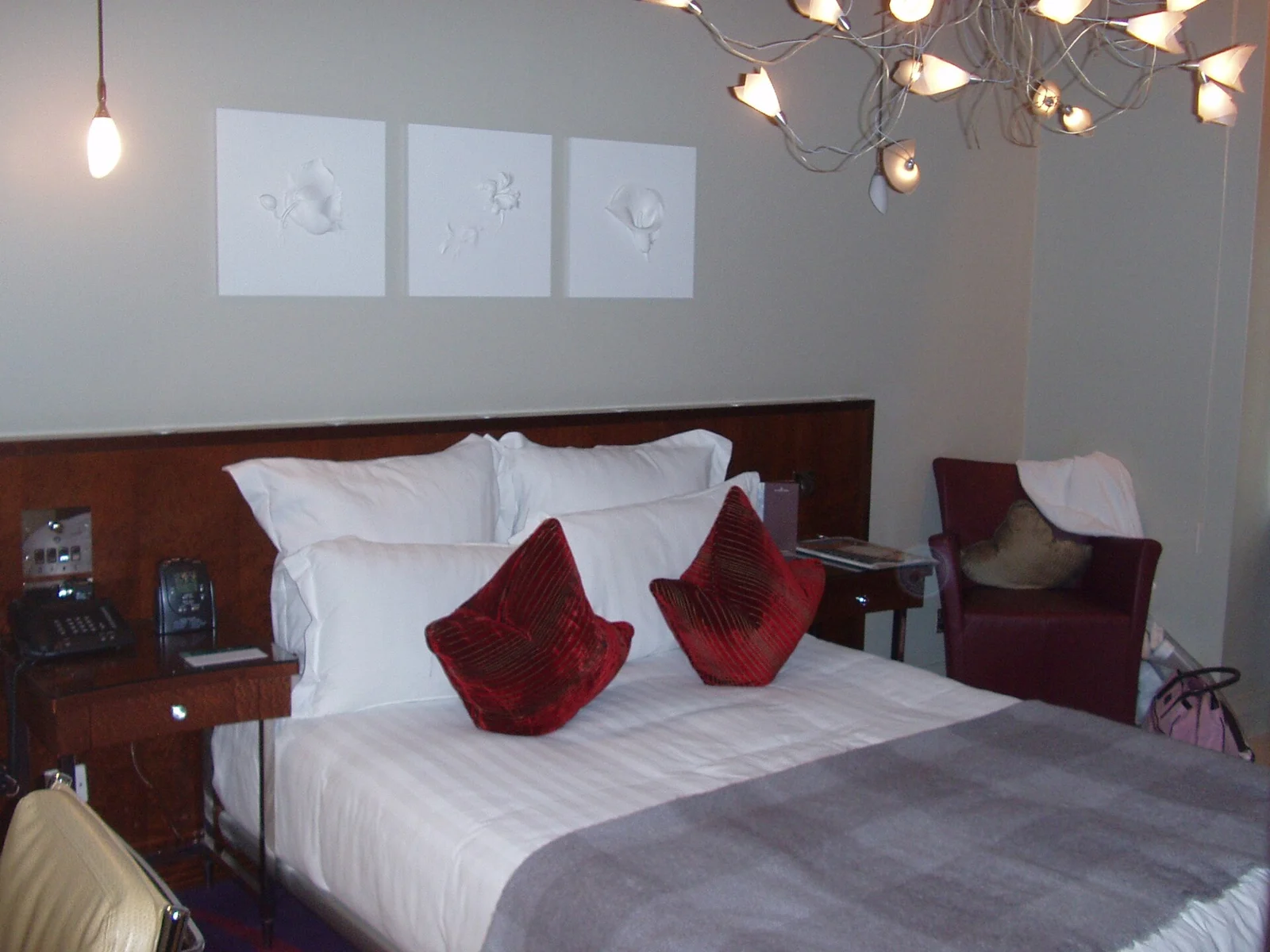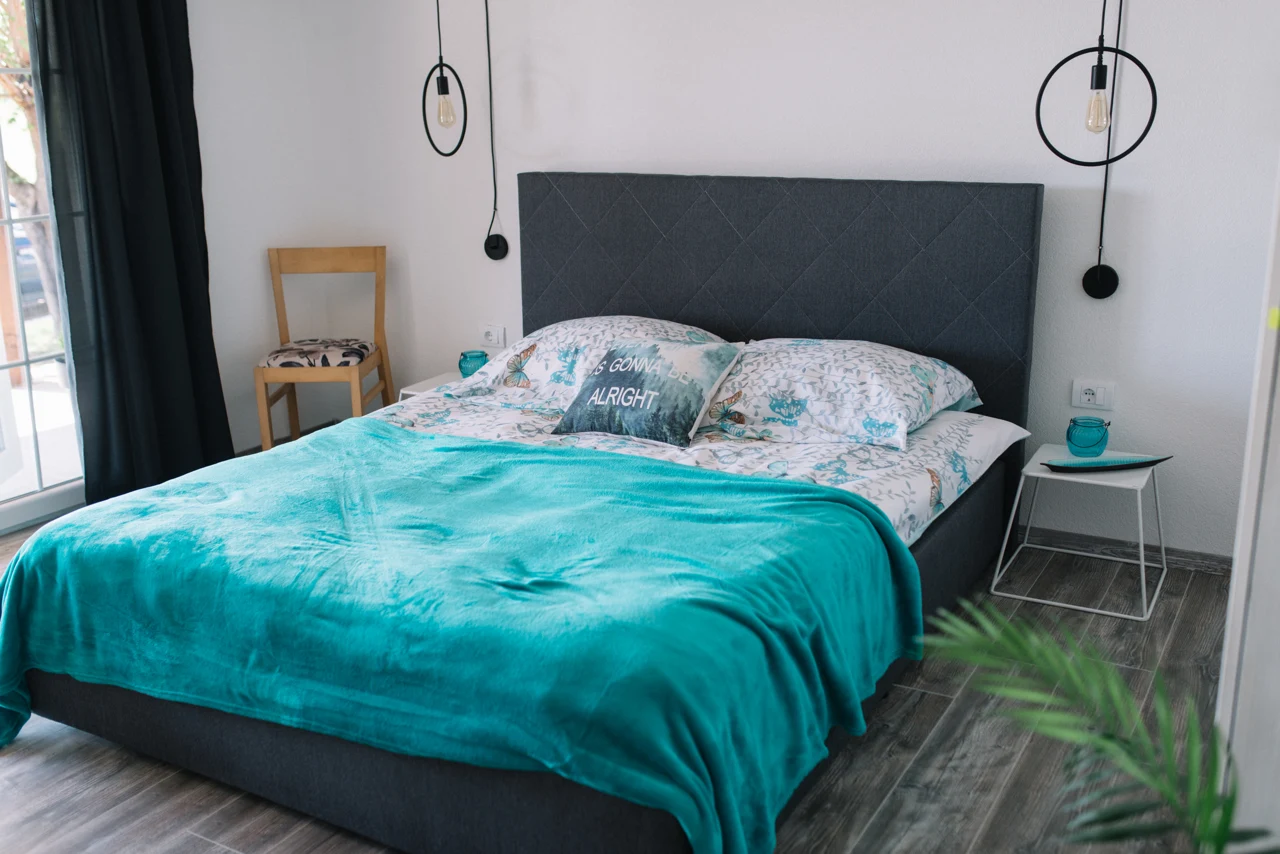
A wall treatment is often imagined as a complete rectangle before the bed stands in front of it. The bedroom view is different: the headboard hides part of that rectangle and divides what remains. Before choosing whether the wall or bed should carry the main statement, consider that interrupted edge. These two original fictional compositions keep the room scale and bed position fixed. They describe geometry, not an installed makeover or a claim about sleep.
A plain rectangle cuts a patterned field
In the first proposal, imagine a low rectangular headboard with a straight horizontal top. Behind it, an original pattern consists of widely spaced vertical marks, each continuing upward beyond the furniture. The headboard conceals their lower portions, but several long sections remain visible above it. To my eye, the marks still read as parts of a larger field extending behind the bed. The furniture provides an interruption without becoming the main drawing.
Now imagine the same plain rectangle substantially taller, without changing the proposed wall pattern. Less of each mark remains above it. Near the sides, isolated fragments may read more like separate strips than a continuous field. The pattern has not become intrinsically bad; the amount and arrangement visible in this particular view have changed. A full-wall product image would not show that interruption by your furniture.
Keep the bed, but reconsider the visible pattern
Suppose the existing tall plain headboard is staying. Buying the imagined wall treatment because its complete pattern looks attractive could therefore miss the desired result. The useful next comparison would show the actual proposed pattern only in the area that remains visible around the retained bed. You might prefer a different repeat or decide against that wall purchase altogether. No instruction for cutting, hanging or modifying wallpaper follows from the drawing.
For the original low rectangle, I would keep the wall-led direction because the longer visible marks still supply the main composition. For the taller version, I would pause the purchase rather than assume the concealed part does the same visual work. That is a consequence of the specific interruption, not simply a rule to make one object busy and everything else quiet.
A quiet field lets the upper edge become the drawing
The second proposal gives the headboard an original gently curved top with a higher center and lower shoulders. Leave the wall unpatterned. The shape now appears through the boundary between furniture and wall: the broad rise, the descent toward each side and the spaces left beside the shoulders. I would follow that edge rather than look for a larger repeating field behind it.
If the retained headboard instead has a plain straight top, buying a quiet wall finish will not create the imagined curved outline. That distinction changes the decision. Someone specifically seeking the curved boundary would need to consider an actual different headboard, or accept a different composition with the existing one. Buying additional bedding cannot supply a missing furniture edge. No replacement or attachment suitability is established here.
Compare the junction before committing
Getty’s formal-analysis vocabulary describes line and shape, while its design principles discuss emphasis. Those terms help describe these proposals; the interpretations remain personal. The fictional vertical marks are not a reproduction of a named wallpaper, and neither proposed outline is a product specification.
In an actual buying decision, compare the visible portion above and beside the retained headboard, not just the complete wall pattern or an isolated furniture photograph. Keep measurements, permissions, attachment requirements and supplier directions as separate practical enquiries. I would retain the low rectangular bed for the wall-led version, and retain a genuinely desired shaped edge for the quiet-wall version. The reason in each case is what remains legible at their shared boundary.
Sources & further reading
Published sources for the details and examples discussed in this story.