A leaf-mould project begins with material that is not yet the finished product. That waiting period is its main household commitment. This original garden plan uses the RHS’s bag route and one identified stream of leaves from a private garden. It proposes a later mulch use, not a potting-compost formula. No leaves have been collected or decomposed for this article.
Choose the route and the leaf stream
RHS describes oak, beech and hornbeam leaves as suitable for a straightforward leaf-mould project. Its bag method places leaves in a bin liner, moistens dry material, adds holes, leaves the top loosely tied and allows a long decomposition period, up to about two years. Check that material does not dry out; a slow heap may need turning.
The guide distinguishes thicker leaves, evergreens and conifer material that need different handling or longer times, and warns about litter or pollution in street collections. This plan therefore selects only an identified suitable own-garden leaf stream. It uses neither a shredder nor a mower and supplies no wire-frame construction procedure. Follow actual tool directions for adult handling and bag preparation.
Give the unfinished batch somewhere to remain
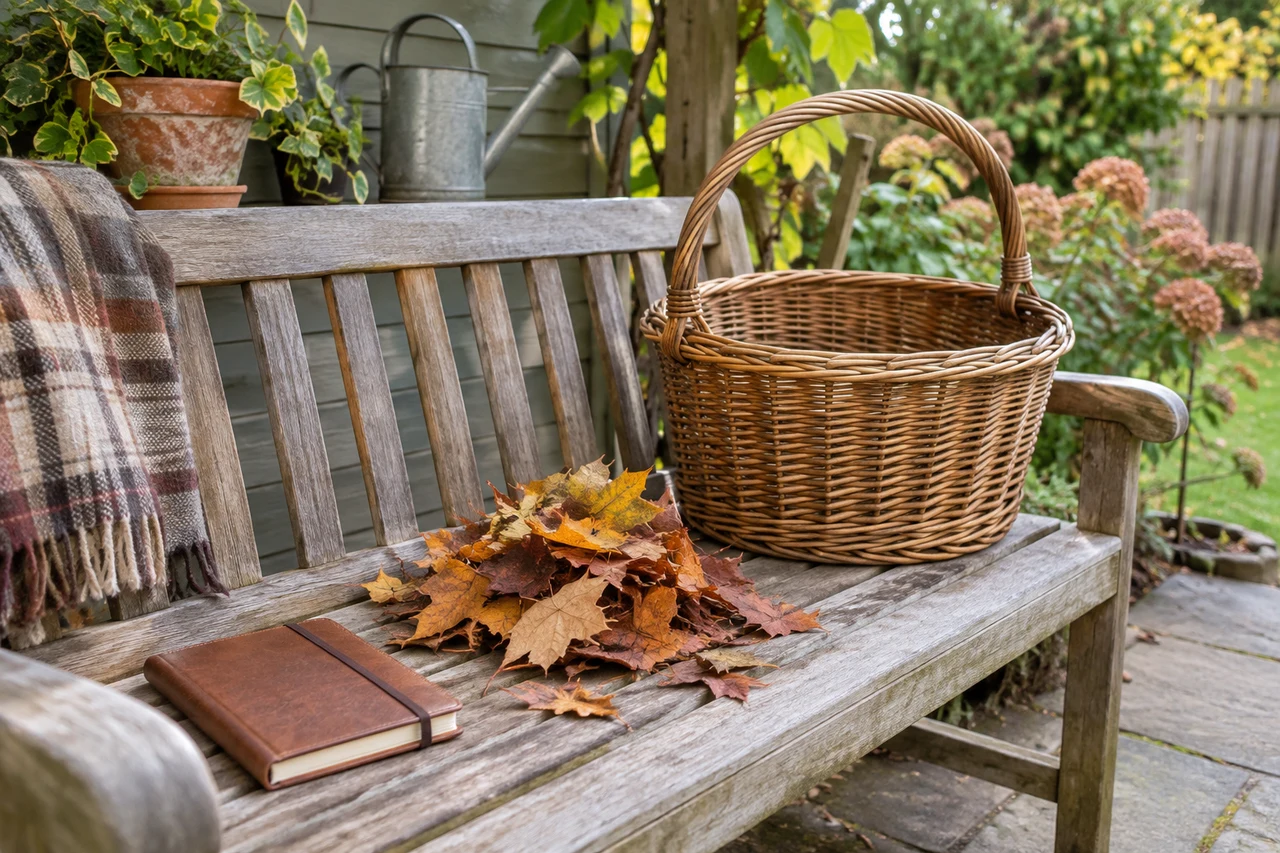
Imagine a garden with space for one modest batch. Before collecting, choose a location where that bag can remain without blocking ordinary access or being mistaken for rubbish awaiting removal. A temporary gap beside a door is not a long-term storage plan simply because the bag fits there today.
Mark the batch identity and actual collection date when collection occurs. Keep later leaves separate rather than continually adding fresh material to an older batch whose progress you want to understand. The date records a beginning. It is not a promised completion date or proof that every part of the contents has reached the same condition.
Make an observation note rather than a countdown
An original project note can have three useful entries: what is in this batch, what was actually observed at the last check, and what care was carried out. Keep observations descriptive. Do not write that a purchased bag, a photograph or a calendar has verified finished leaf mould.
If the household cannot maintain the chosen place or appropriate checks, reconsider the scale before gathering more. The intended project is one manageable batch, not a garden inventory that expands every time more leaves fall. A record also helps another person distinguish the material being kept from ordinary discarded leaves.
Decide on use from the material and the garden
RHS distinguishes younger or poorer-quality leaf mould used as mulch or soil improver from well-rotted material used in other ways. It also warns that weed seeds can be present. Follow its relevant use guidance and the needs of the actual area rather than assume that elapsed time makes the material appropriate everywhere.
This plan stops at evaluating a later mulch use. It does not give a sowing mix or a recipe for replacing commercial potting compost. Before buying a large leaf-collection machine or a permanent enclosure, decide whether one bagged project already suits the available material, space and patience. No decomposition speed, soil improvement or plant-growth result has been measured here.
Sources & further reading
Published sources for the details and examples discussed in this story.